
The House Pair
Camera glasses went on pre-order last week from $395. Cultural venues had already begun banning the visitor's own. The pair that survives is the one the venue hands over.
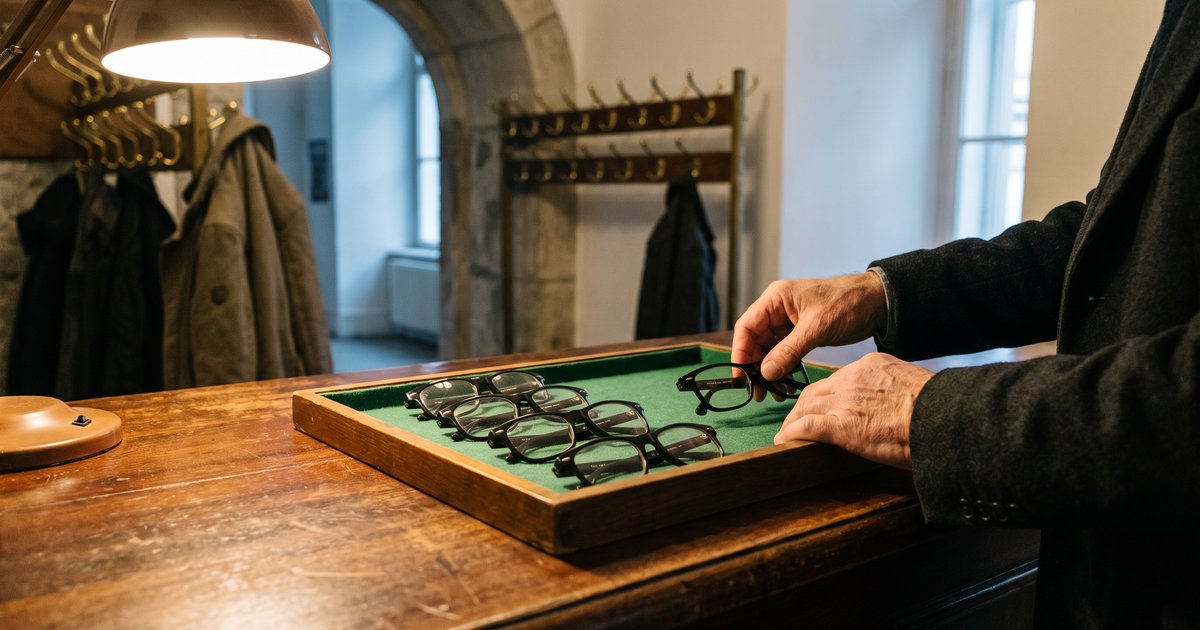
On 12 November Google opened pre-orders for what it calls Intelligent Eyewear: Gemini glasses designed with Warby Parker, Gentle Monster and Samsung, starting at $395 and in shops from 10 December. The specification reads like a list of things that have been taken away. The frames weigh "around 41 grams". The battery "lasts up to nine hours". There is a 12-megapixel camera and, as 9to5Google reports, a physical switch so that you can "wear them as regular glasses only".
That last phrase is the design goal of the whole category, and it is the difficulty at the door. Five weeks earlier, on 9 October, the cultural sector of Groningen published a joint statement saying, in translation, that smart glasses with a camera and AI have no place in its buildings or at its events. NL Times put the number at 35. The published list, which says it is not exhaustive, names 37, including the Groninger Museum, Forum Groningen, the Grand Theatre, Vera, Simplon, Eurosonic Noorderslag and Noorderzon. The signatories said they were writing a ban into their house rules.
So in one autumn Google joined Meta in putting a camera into an ordinary-looking frame, and a city's museums, theatres and festivals declined to admit it. For anyone who builds immersive work in cultural buildings, the collision matters more than either event alone. For a decade the pitch has been that visitors would one day arrive already wearing the display.
A rule nobody can see to enforce
Groningen is one entry in a longer list. On 5 October the Associated Press reported that Norway's government would propose a temporary ban in some places, one that "could extend to public concerts and sports events, plus parks, beaches, museums and shopping centers". The government stressed that it was not proposing a total ban, and said a bill would go to parliament "as soon as possible". In August the UK Cinema Association said many members were "introducing policies to prohibit and/or restrict the wearing of camera-enabled smart glasses", and the Guardian reported that ATG Theatres has said people wearing them during shows will be asked to remove them.
Read these closely and they share a gap. Each describes a rule, or the intention of one, and none describes a check. Neither the Groningen statement nor the NL Times and OOG TV reports of it say how door staff would tell one black frame from another. The Guardian's report adds that the cinema association was not aware of any bans by members to date. VR.org's write-up of the UK venues was blunt: "Enforcement will be imperfect", because busy bar staff "cannot reliably spot a pair".
The manufacturers' answer is the indicator light. Google says its glasses "are designed to stop recording if the light is covered or disabled". Meta got there after a public backlash. In August Engadget reported Meta's Alex Himel announcing a fix so that "the camera will now stop working if the light is covered during a recording", after wearers found they could start filming and then cover the LED. The same report describes "a thriving market for cheap accessories that can bypass the recording light without detection". A light is a signal to the person standing in front of the wearer.
An indicator light tells front of house nothing about the third row of a dark room.
The exemption is the interesting part
The Groningen statement carries one sentence that does more work than the rest. Aids used for supportive or medical purposes, it says, with an "of course", are not covered.
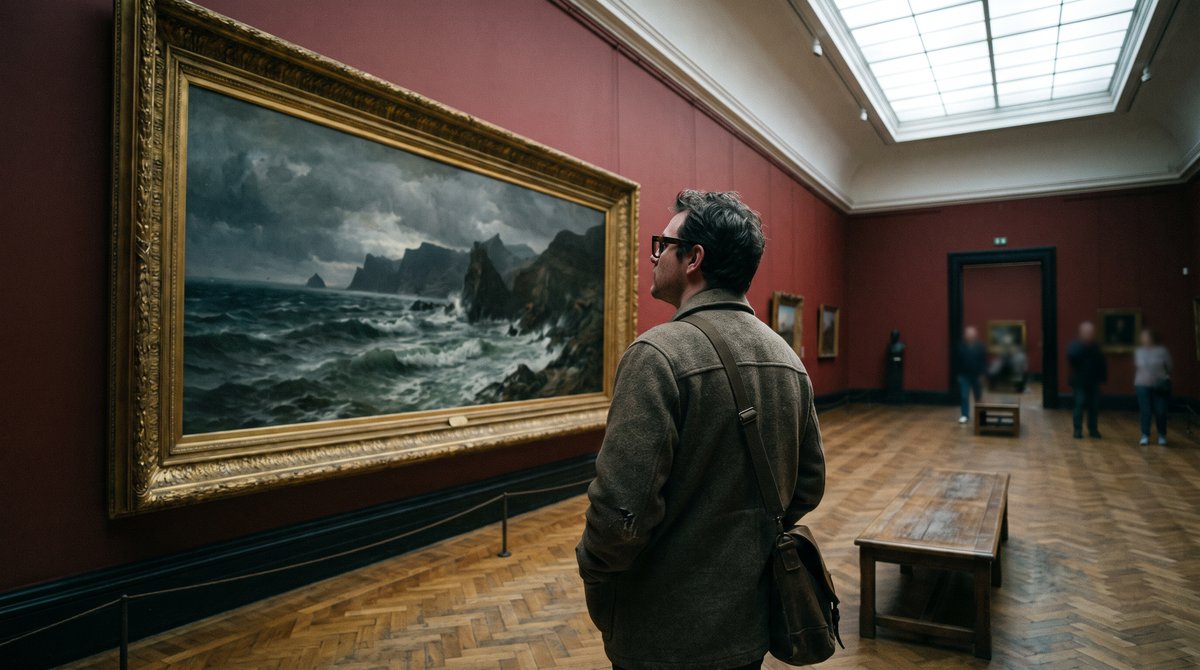
Those aids are the same glasses. On 14 October, five days after Groningen, Meta, EssilorLuxottica and Milan's Pinacoteca di Brera launched Sensing Art. A blind or low-vision visitor stands in front of "one of eight selected artworks on the itinerary", starts artwork recognition from the glasses and hears a description through the open-ear speakers. The tour was developed by the Associazione Nazionale Subvedenti using its DescriVedendo method. Meta's announcement has the glasses "available Tuesday through Friday", by reservation.
It never says outright that the museum hands the pair over, and MIXED noted that Meta gives no end date, fee or visitor numbers. The shape is still legible: a fixed route, authored descriptions, a booked slot, a known device.
The accessibility case deserves better than an "of course". Google's own launch post promotes the Aira visual interpreting service on its glasses. Colin Hughes, a former BBC producer who campaigns on disabled people's access to technology, wrote in July: "We should not have to choose between privacy and independence. We should insist on both." A door policy that depends on staff judging who looks as if they need their glasses will fail those visitors first.

What the house pair buys
None of this is new in principle. The audio guide handset and the headset in a location-based VR attraction are house devices, cleaned, charged and counted back in. London's National Theatre has offered bookable Epson smart caption glasses to deaf and hard of hearing audiences since a 2018 trial. In August, Ningbo's Tianyi Pavilion was reported to be piloting Rokid glasses that give "automatic commentary based on visitors' locations and surroundings".
What the consumer launch changes is less than it looks. Google's footnote says Intelligent Eyewear is "only available for use with Google accounts from the United States and South Korea" and needs a compatible 18+ account. It is a personal device, bound to one adult's account and phone, so it is hard to lend, and it is not yet on sale in Britain at all. The visitor's own pair is being written out of the house rules, and the retail pair is not built to be handed across a desk. The gap between them is a fleet device a venue can manage.
At BCVR we build hybrid physical and digital installations, and the device has always been on our kit list. Three things now argue for keeping it there. Generative tools have cut the cost of drafting and translating the authored layer. Brera's descriptions were still written by specialists, as they should be, so the money moves to the handover: charging, cleaning, fitting over a visitor's own lenses, the minute at the desk. An issued pair returns evidence a personal one never will, with consent and in aggregate: pairs out, routes finished, stops skipped. And a venue can say exactly what its own device records, which it cannot say of a stranger's.
There is a rule to borrow as well. Royal Caribbean's policy, as logged in VR.org's tracker, reads: "Smart glasses may be brought onboard; however, they may not be used in the following areas." It regulates use by zone. Staff still have to notice the glasses, but only where it matters.
That tracker, updated on 15 November, still lists Norway's bill as yet to come. Google's glasses reach the shops on 10 December. Somewhere between those dates a front of house manager will be asked what the policy is, and the workable answer involves a tray of house pairs, offered alongside a visitor's own assistive glasses and never in place of them.
Scott is the founder of BCVR, a London studio producing immersive installations across XR, projection, spatial audio and generative AI.
Sources
- Google: See our intelligent eyewear lineup and pre-order your pair (12 Nov 2026)
- 9to5Google: Google launches Intelligent Eyewear glasses (12 Nov 2026)
- Kunstpunt Groningen: Statement Cultuursector Groningen (9 Oct 2026)
- NL Times: 35 Groningen clubs, museums, events jointly ban smart glasses (9 Oct 2026)
- OOG TV: Groningse cultuursector wil slimme brillen weren (9 Oct 2026)
- Associated Press via ClickOnDetroit: Norway seeks temporary ban on smart glasses (5 Oct 2026)
- The Guardian via AOL: UK cinemas look at banning Meta smart glasses over piracy fears (20 Aug 2026)
- VR.org: UK Pubs, Theatres, and Comic-Con Are Writing Meta's Glasses Out of the House Rules (10 Aug 2026)
- VR.org: Smart Glasses Bans 2026 tracker (updated 15 Nov 2026)
- Engadget: Meta is closing a loophole that allowed people to record with their smart glasses' light covered (27 Aug 2026)
- Meta Newsroom: Meta, Milan's Pinacoteca di Brera, and EssilorLuxottica Expand Access to Art Through AI Glasses (14 Oct 2026)
- MIXED: Meta's AI glasses now describe eight Brera masterpieces to blind visitors in Milan (17 Oct 2026)
- Colin Hughes, Aestumanda: Calling smart glasses 'predator technology' ignores disabled people who rely on them (30 Jul 2026)
- Epson: National Theatre uses Moverio to provide captioning (22 Feb 2019)
- China Daily: AI glasses bring smart tour experiences to Tianyi Pavilion (6 Aug 2026)

Nobody Budgets for RAM
Every XR price forecast assumes someone absorbs component inflation, and the two forecasters you would ask disagree by two years.
The Deployer in the Room
Immersive work built its case on generative content and audience sensing. On 2 August, both became somebody's legal responsibility, and that somebody is standing on site.
The Scan Is the Prompt
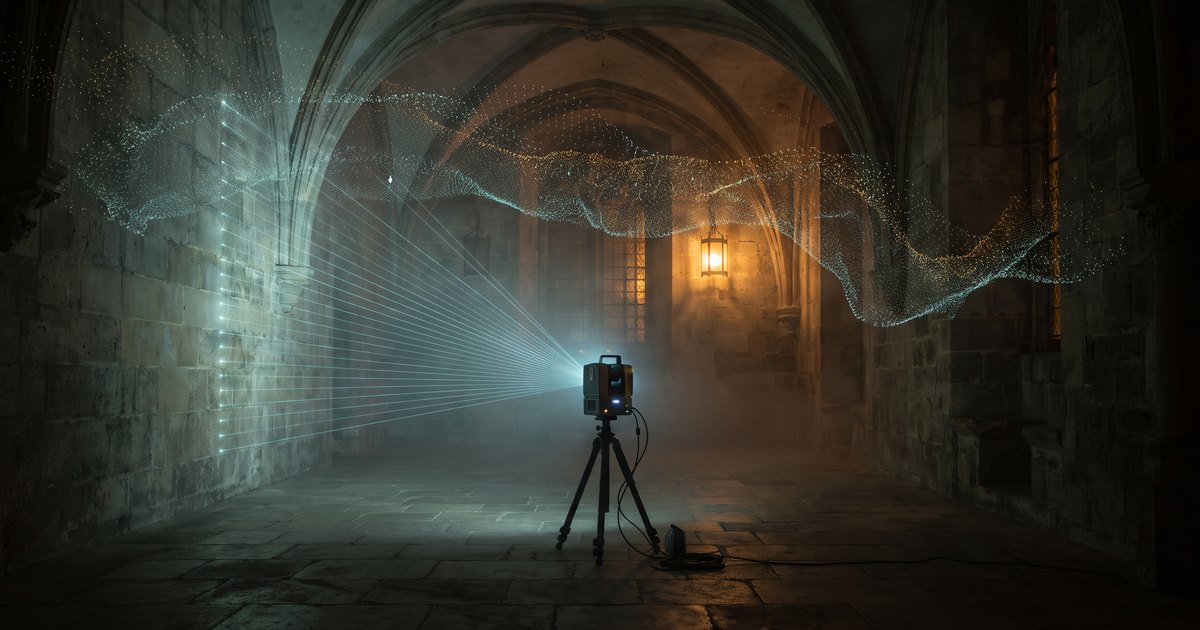
World models will invent everything you do not give them. On an installation, the one thing you cannot let them invent is the building.