
Nobody Budgets for RAM
Every XR price forecast assumes someone absorbs component inflation, and the two forecasters you would ask disagree by two years.
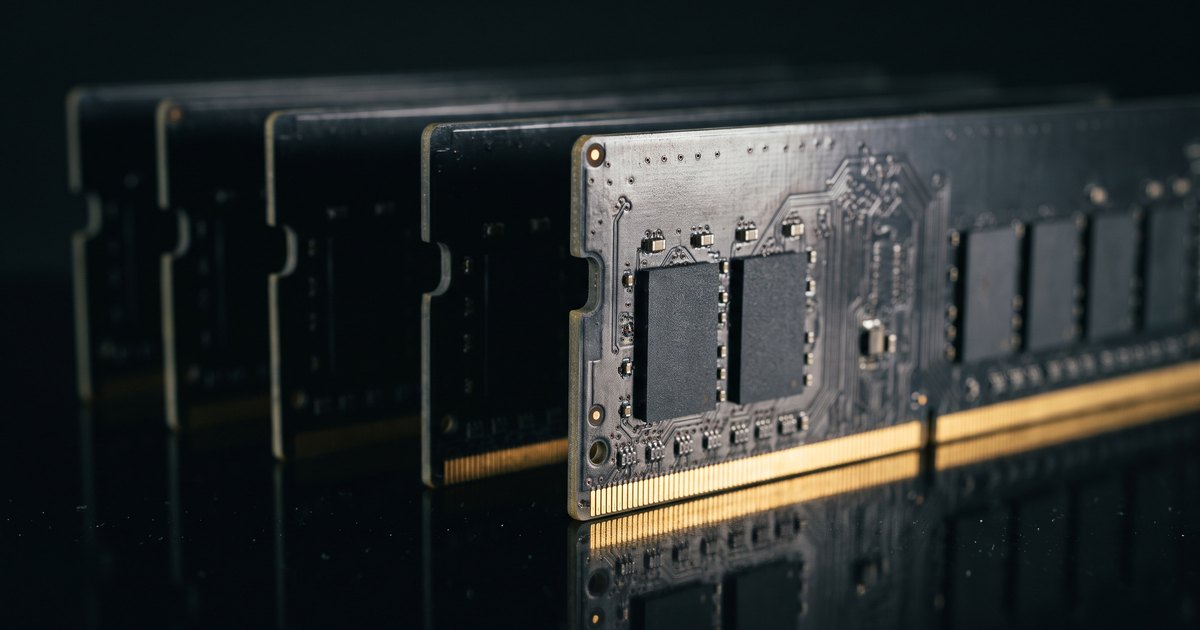
Every price forecast in XR assumes somebody absorbs component inflation. That assumption is now load-bearing, and the two people you would ask about it disagree by two years.
On 16 April, Meta published a short note about Quest pricing. Three days later the Quest 3S went from $299.99 to $349.99 and the 512GB Quest 3 from $499.99 to $599.99. "The cost of building high-performance VR hardware has risen significantly," the company wrote, and pointed at memory chips.
Valve had got there first. In February, having announced the Steam Frame and Steam Machine the previous November without prices, it said it needed to revisit both the shipping schedule and the pricing, because "the memory and storage shortages you've likely heard about across the industry have rapidly increased since then."
Two device makers repricing on components inside two months is unusual. What turns it into a planning problem is that nobody agrees when it stops.
The two-year gap
IDC's memory crisis note, published on 26 August, says memory prices are "expected to continue increasing until at least 2028" and describes the market that emerges "on the other side of the crisis, when the memory supply finally stabilizes in 2028."
Two days before that, at the groundbreaking for SK hynix's packaging plant in Indiana, chief executive Kwak Noh-jung forecast a global memory chip shortage through the end of 2030, with supply and demand balancing after that. In June the company's chairman, Chey Tae-won, put it more mildly: "Until 2030, there's still some shortage." SK hynix is doubling its memory wafer capacity within five years, but Chey put the lead time for a greenfield fab at more than five years, so on his own numbers the new output lands about when the squeeze is meant to end anyway.
Take the second forecast with the scepticism it deserves. SK hynix is one of the three firms that would have to supply any normalisation, and its margins improve the longer the shortage runs. It is also the company that would know. Somewhere between 2028 and 2030 is where every hardware line in every immersive proposal written this year resolves.
What the ASP forecast is actually saying
IDC's smart glasses outlook, published in June, has display-less glasses at 13.6 million units and $5.1bn this year, rising to 27.3 million units by 2030, with the average selling price falling from $376 to $229. For the least memory-hungry product in the category, that ordinary volume-up, price-down curve is probably right.
The mixed reality line is more interesting. ASP goes from $742 in 2026 to $682 in 2030: an eight per cent decline over four years, flat in nominal terms and rising in real ones, in a category that has historically deflated far faster. A flat ASP forecast is what sustained cost pressure looks like on a spreadsheet.
The outlook does not mention memory, DRAM, components or supply anywhere in it. What it does say is that falling ASPs drive volume, but that they also mean "vendors who compete purely on hardware will face margin pressure, and software, services, and AI differentiation will become the real moat."
Read that next to Meta's April note and the two stop contradicting each other. Prices fall to the buyer because vendors eat the difference. Meta's price rise is a vendor declining to keep eating it.
The demand side is not the problem
In the first quarter of 2026, display-less smart glasses shipped about 2.25 million units, up 167 per cent year on year, a single quarter close to the whole of 2024. Display eyewear grew 86 per cent. Meta held 69.2 per cent of the smart glasses market overall.
The component numbers underneath are the ones to watch. TrendForce put conventional DRAM contract prices up by roughly 93 to 98 per cent quarter on quarter in the first quarter of this year, with memory industry revenue up 81 per cent to $97bn in that quarter alone. Increases are moderating into the third quarter, but from a very high base, and TrendForce is blunt about where that lands: "record-high contract prices mean customers from consumer markets, such as PCs and smartphones, are reaching their affordability limit."
TrendForce reported in January that the waveguide order for Meta's Ray-Ban Display had been revised up from around 80,000 units to 150,000 within six months, and forecast 950,000 AR glasses shipments for 2026, up 53 per cent, naming capacity limits in optics, displays and assembly as the constraints on scaling. Samsung and Google's Android XR glasses are teased for this autumn, on a timeline last confirmed in May, with display versions due in 2027. Nobody in this market is short of buyers. They are short of parts.
What a studio does when the device gets expensive
On 28 August, Schell Games cut 10 per cent of its staff, leaving around 125 people. "In 24 years as a studio, this is the first time we've found it necessary to have a layoff," Jesse Schell said, describing a move toward "a greater number of smaller projects" and citing "the way the industry is right now." Road to VR supplies context Schell did not: Meta's studio closures and cancellations this year shifted the VR funding environment.
He did not blame memory prices and neither will I. But keep one number. VR is now about 30 per cent of the studio's work, down from around 80 per cent, and the growth area is what it calls VR-adjacent work, including interactive projection for location-based entertainment. A studio that spent two decades building for headsets is moving toward things you can walk into without one.
From where I sit
When a client asks for the hardware line in a proposal, the question underneath it is cost per visitor. A headset build puts a computer in every pair of hands, and with it comes capex, charging, breakage, staff to fit and sanitise, and a refresh cycle quoted at a price you cannot hold. A projected or LED build puts fewer, larger machines in a room. Those are not memory-free, and media servers have their own supply stories, but they carry far less memory per head of audience served. That is my read, not a published figure. Both can be the right answer. The difference now is that the headset option carries a line I cannot forecast ninety days out.
The generative side cuts the other way, and it is the one piece of good news in the arithmetic. Content is the half getting cheaper: variants, previz and language versions have all come down in real terms for us over the past two years, and that saving goes into the scope rather than the margin.
Content is deflating and the devices are not, so the contingency belongs on the side with a chip in it.
What to do about it
Cost per visitor sets throughput, and throughput is the number a brand reports on afterwards, so a device-per-person design costed in 2024 is worth re-running before it reaches a purchase order. Ask suppliers to quote hardware with a validity window written on it, and treat anything past ninety days as an estimate. If a project has a phase two in 2027, either buy the devices now or design phase two so it does not need any. And when a forecast says the glasses will be cheap by then, find out who is assumed to be absorbing the difference, because at the moment it is the vendor, and vendors stop.
We have started putting a dated line in our own quotes saying which week the hardware pricing came from. It looks fussy on the page. It has already saved one awkward conversation.
Scott Marshall runs BCVR, a London studio building immersive and mixed reality installations for brands and cultural venues. https://www.bcvr.io
Sources
- Meta, "An Update on Meta Quest Pricing", 16 April 2026
- Road to VR, "Meta is Raising Quest 3 and Quest 3S Prices Amid Memory Cost Surge", 16 April 2026
- Road to VR, "Valve Reconsiders Steam Frame Price & Release Date Amid RAM & Storage Shortage", 5 February 2026
- The Korea Herald, "SK hynix open to US investment, sees memory shortage through 2030", 28 August 2026
- Tom's Hardware, "SK hynix to double memory wafer capacity within five years, chairman says", 2 June 2026
- IDC, "Smart Glasses Market 2026: XR Is Rewriting the Rules", 15 June 2026
- IDC, "Smartphone Shipments Set for Record 16.7% Drop in 2026, as the Memory Crisis Hits Full Force", 26 August 2026
- TrendForce, "Rapid Contract Price Surge Drives 1Q26 DRAM Industry Up 81% QoQ", 1 June 2026
- TrendForce, "AI Server Demand Continues to Support Memory Prices in 3Q26", 3 July 2026
- TrendForce, "Component Orders for Meta Ray-Ban Display Glasses Revised Up Twice", 30 January 2026
- Road to VR, "Veteran VR Studio Schell Games Confirms Layoffs Affecting 10 Percent of Staff", 28 August 2026
- 9to5Google, "Google and Samsung's Android XR glasses launch in 'Fall' 2026", 19 May 2026
The House Pair
Camera glasses went on pre-order last week from $395. Cultural venues had already begun banning the visitor's own. The pair that survives is the one the venue hands over.
The Deployer in the Room
Immersive work built its case on generative content and audience sensing. On 2 August, both became somebody's legal responsibility, and that somebody is standing on site.
The Scan Is the Prompt
World models will invent everything you do not give them. On an installation, the one thing you cannot let them invent is the building.